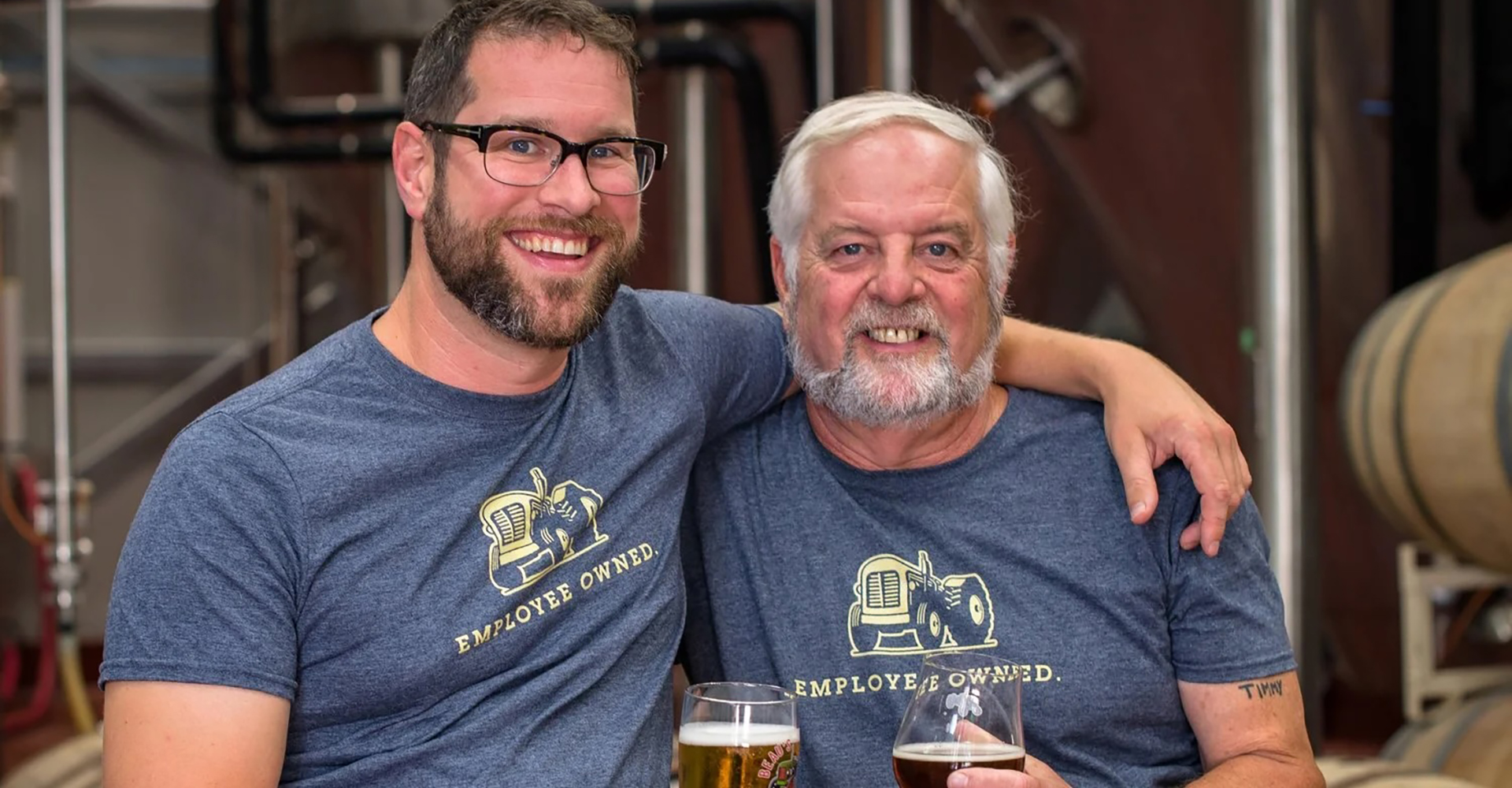
He quit his job. Sold his house. Moved his young family — including a two-year-old and a two-week-old — into his parents' home in rural Ontario. And then he and his father started a brewery.
Steve Beauchesne's decision to co-found Beau's All Natural Brewing reads like a great entrepreneurial origin story. In many ways, it is. Beau's became Canada's largest certified organic brewery, earned B Corp certification, and built a fiercely loyal community around a brand that stood for something well beyond the product in the glass.
But in a recent episode of ABFI Table Talk, Steve, now CEO of Family Enterprise Canada, offered something rarer than a success story. He offered the full picture: the near-collapse of his father-son partnership in the earliest days, a well-intentioned employee ownership plan that backfired spectacularly, and the convergence of financial strain and personal tragedy that ultimately led the family to sell Beau's in 2022. It is a story built on hard-won lessons that every family in business together needs to hear.
Steve's father Tim had spent over two decades building a textile business in Ontario. When the industry began moving out of Canada, Tim faced a choice: follow the work, or start over. He chose to start over and brought a shortlist of ideas to his son in Toronto.
They never got past the brewery idea. Steve's response was immediate: if his father was serious, Steve would quit his job, sell his house, and move back home to build it together. What followed was a full-family mobilization. Steve's mother took on two jobs while managing the bookkeeping; his siblings helped on evenings and weekends; and he and his father put every hour they had into developing a business plan in an industry neither of them knew.
"Looking back, the interesting part is that it didn't seem like it was a risky thing to do at the time," Steve reflects. "We were risking not only our livelihoods but all of our family relationships."
Beau's grew — and fast. Their lagered ale, a deliberate oxymoron designed to make people curious enough to ask, became a signature product. Their organic commitment placed them years ahead of the market. But the governance of the family partnership evolved through trial and error, with some genuinely close calls.
One of the most revealing stories Steve tells is from the earliest days. After a disagreement he and his father couldn't resolve, Tim ended the conversation by dismissively asking Steve to go fetch him milk for his coffee. "I got in the car with the plan of just driving home, packing up, and moving back to Toronto," Steve says. He sat in the parking lot for five minutes, bought the milk, came back, and the conversation that followed reset their entire working relationship on a more equal footing.
It was an early lesson in something family businesses confront constantly: founder mentality dies hard, and without a clear framework for resolving disagreements, even the closest partnerships are at risk.
The more costly governance lesson came years later, when Beau's created an employee share ownership plan to share success with the people who built it. The intent was right. The execution was underprepared. With 130 new employee-owners came 130 different expectations; the business wasn't equipped to manage. "We did a lunch and learn and then thought that was going to be fine," Steve says. "Every time someone came in with what seemed like a ridiculous request, it was a warning sign that we needed to put far more effort in." The plan that was meant to build engagement ended up eroding it. A generous act, without the governance infrastructure behind it, created a crisis rather than a community.
By 2022, Beau's had navigated two years of pandemic pressure and was carrying significant debt. Their principal lender, initially supportive, began pulling back. Then, within two weeks, Steve's daughters lost their mother without warning, and his wife was diagnosed with cancer.
"I did not have the bandwidth to solve the financial crisis and solve the family crisis," he says. "I had to choose one or the other." Steve chose his family. His father, who had already transitioned out of day-to-day operations, was not in a position to step back in. The brewery was sold to Steam Whistle Brewing.
Steve is honest about what he believes could have changed the outcome — not the tragedies, which no plan can prevent, but the absence of structures that could have held the business through a crisis while he focused on his family. "We still may have made the decision to sell," he says. "But it wouldn't have been made in a moment of crisis."
What Steve does now at Family Enterprise Canada is, in many ways, the work he wishes had existed when he needed it most. As members, he and his father had attended their first Family Enterprise Canada symposium and found it revelatory, the first time either of them had encountered research, language, and frameworks for what they were experiencing. But integrating that support into a business growing 80% a year while simultaneously trying to scale the family structure was almost impossible.
"How do you build the business, and build the family, and build the family business at the same time?" Steve asks. It's not a rhetorical question. It's the one most business families never stop facing.
Peer groups, like FEC’s peer advisory groups (PAGs) and ABFI’s Business Family Forum, are one of the most powerful answers Steve has found. A room of people who have lived your exact situation and will tell you the truth. "I can't think of a better way to reduce your risk as a family," he says. "Insurance will help on the financial side, but this is your insurance for the actual humans in your family."
For family enterprises seeking to combine the authenticity of a peer community with structured learning, ABFI and Family Enterprise Canada have partnered to launch the Business Family Forum — a professionally facilitated peer-group model that pairs the peer advisory format with family business curriculum, research, and expert facilitation.
Steve sees the Business Family Forum as directly addressing something he experienced firsthand: the desire for a peer group to keep growing alongside you. "For members that are looking for more — giving them that opportunity is wonderful." Members of the Business Family Forum also automatically become members of Family Enterprise Canada, connecting Alberta families to a national community of peers, advisors, and resources.
If you're in a family business and haven't yet found your community, your peer group, your forum, your safe room, Steve's message is worth taking seriously. The business risk is the one most families plan for. The family risk is the one that too often catches them off guard.
To learn more about the Business Family Forum and ABFI's programs for family enterprises, visit abfi.ca. Connect with ABFI Executive Director Matt Knight at matt.knight@ualberta.ca or on LinkedIn.
Learn more about Family Enterprise Canada at familyenterprise.ca.