In the late 1990s, Tom McCullough — a 20-year veteran of RBC Dominion Securities — went looking for an advisor who could help his own family with the kind of wealth they'd built, mostly through real estate. He had access to the best vertical specialists in the country: accountants, lawyers, investment managers. What he couldn't find was anyone willing to sit at the centre and connect the dots.
So when his family's longtime accountant responded to that need with a one-minute pitch about an estate freeze and an insurance policy, Tom realized something most consumers never get the chance to articulate: the system wasn't broken — it just wasn't designed for the question he was actually asking.
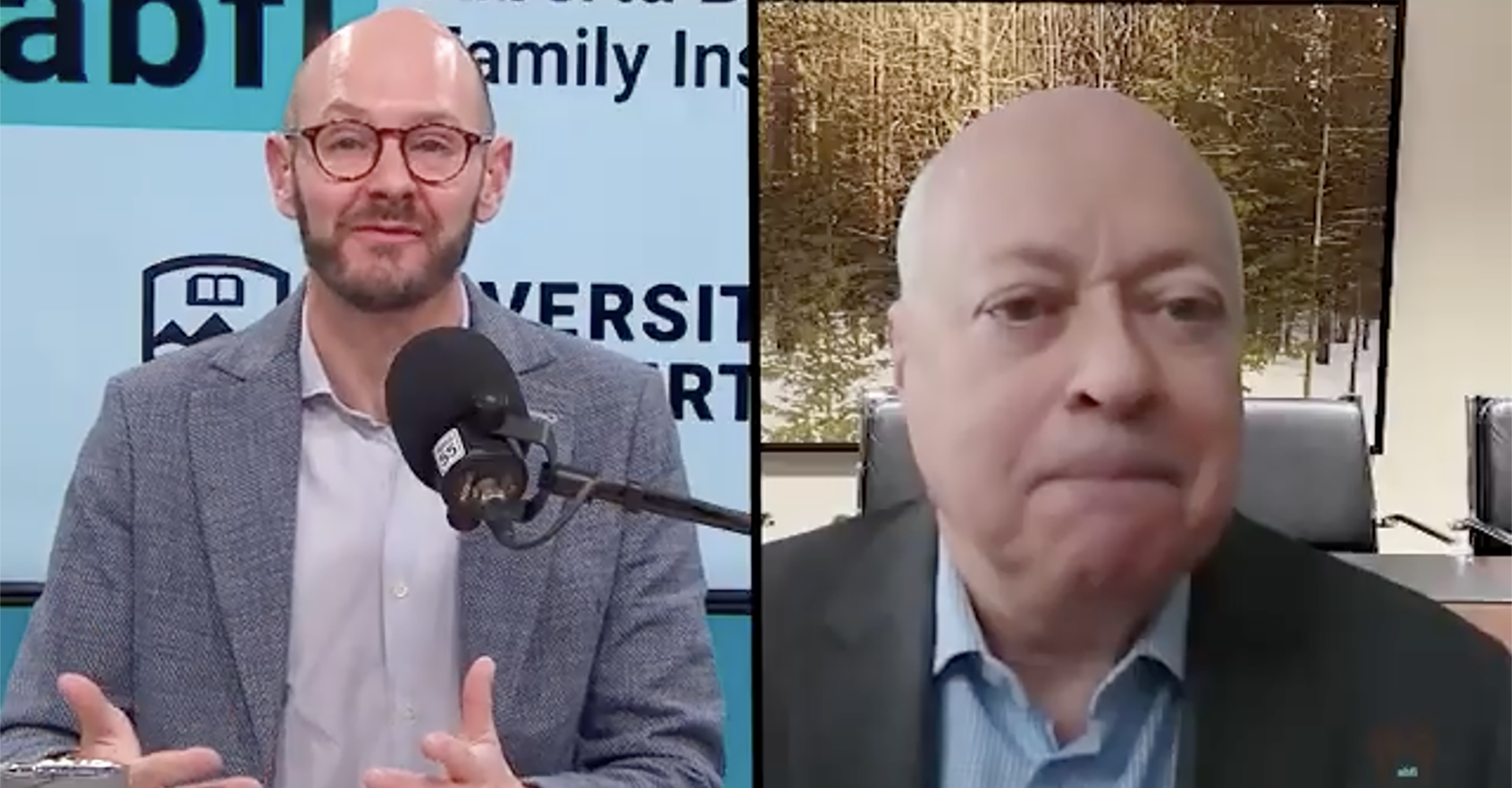
In a recent episode of ABFI Table Talk, Tom — now founder and chair of Northwood Family Office, author of three books, and head of thought leadership at the UHNW Institute — sits down with host Matt Knight to trace how that frustration became a 23-year journey to build the multi-family office profession in Canada.
Tom's diagnosis of the wealth management industry is generous, but unsparing. The advisors he met weren't acting in bad faith — they were doing what they knew. And what they knew was vertical.
"It's not evil. It's not like somebody set out to do something wrong," Tom explains. "It's what they knew. They did what they knew, and what they knew was vertical. It's a little bit like a general contractor versus an electrician. You need both of those people, but you do have to have both of them — unless you're going to be one or both of those people yourself."
The problem, in Tom's words, is that families end up with a roster of excellent vertical specialists "trying to come up with a product solution to a people problem." Investment people sell investment solutions. Insurance people sell insurance solutions. Accountants reach for tax structures. None of them are wrong — but none of them are connecting the dots across a family's life.
That gap is what Tom set out to fill when he left RBC in 2003 and, with partner Scott Hayman, opened Northwood with no clients, no playbook, and an industry that didn't yet exist in Canada.
Northwood's model is built on a simple premise: most wealthy families don't need another specialist. They need someone to play general contractor — to read every legal document, talk to every advisor, ask the right questions, and build a plan that actually reflects what the family is trying to accomplish.
That work starts with paperwork most families have never read in one sitting. "We give them a list of documents that we want," Tom says. "If it was all in actual paper, it would be a foot or two deep. And that's wills, powers of attorney, investment statements, insurance policies, marriage contracts, directorship agreements — every piece of paper. And we read them all. Nobody's ever read all their documents in one sitting before. So just by doing that, we get an amazing insight into the family."
It continues with a discovery meeting designed to surface what most advisor relationships never touch. Tom's favourite question: What are the best three things you've done for yourself and your family in the past 12 months? The answers, he notes, are rarely about money. They're almost always about people. And they reframe the entire engagement around goals first, capital second.
For any family currently working with a roster of advisors and quietly wondering who is supposed to pull it all together — Tom's answer is straightforward. Someone has to. If it isn't a family office, it has to be the family.
One of the most memorable lines of the episode comes when Tom riffs on a phrase he heard at a conference panel: goals-based investing.
"Think about that as oxygen-based breathing," Tom says. "How would you actually invest really without goals? And people do it all day, every day."
The line is funny, but the implication is serious. Most families — and most advisors — start with the asset mix and reverse-engineer the goals. Northwood inverts that order. Until they understand the family's purpose, time horizon, and definition of "enough," they refuse to recommend a portfolio. "Lots of firms might volunteer an asset mix," Tom says, "but I think it depends entirely on the family in their situation."
For business families navigating a liquidity event, succession, or generational transition, the discipline is portable: name the goal first, structure the capital second.
The most circulated line in the episode is one Tom delivered without hesitation when Matt asked him what ultra-high-net-worth families most often get wrong.
"They spend way more time and money preparing the money for the heirs than they do preparing the heirs for the money."
It's a quote that earns its weight because the rest of Tom's career evidences it. Northwood's work isn't just trusts and tax structures. It's family education. It's discovery conversations that often end in tears. It's hard questions about what each generation is meant to inherit beyond capital.
The implication for Canadian business families is direct. Wills and corporate structures matter — but they are not legacy. The legacy is what the next generation knows, believes, and is prepared to do with what they receive.
Tom recently transitioned out of his CEO role at Northwood, while remaining as founder and chair. The decision was deliberate, and for the same reason he urges his client families to act early on succession.
"We wanted to step back from day-to-day leadership while we were still around," he says. "Think about that in a family situation too. Instead of waiting till mom or dad passes away and everybody goes, 'oh my gosh, now what are we going to do?' We wanted to do the opposite. Step back, let the next generation lead, and still be around."
It's a quietly radical posture in a country where most founders cling to the corner office until they can't. Tom's framing — succession as a proactive gift, not a reluctant exit — is the same advice he'd give any of the families Northwood serves.
Tom's broader read on the Canadian landscape should be required reading for any business family. There are an estimated 15,000–20,000 Canadian families with $30 million or more in net worth, growing every year. The world they're navigating — global, blended, regulated, geopolitical — is more complex than at any point in the firm's history. And the supply of true integrated advisors has not kept pace.
In Tom's own words: the role of an integrated advisor "is a key and growing." His piece The Rise of the Integrated Advisor, published in the Journal of Wealth Management, makes the case that integrated advising is on its way to becoming a standalone profession — like general contracting itself.
For Albertan and Western Canadian families specifically, Tom signalled an active push to open a Northwood office in the West in 2026 or 2027. The puck, as he put it, is moving.
Tom McCullough's story is, on the surface, a successful entrepreneurial arc. Twenty years inside a bank, twenty-three years building an industry, three books, and a profession that didn't exist when he started. But the more useful read is the one underneath: a frustrated consumer who refused to accept that the system was good enough, and built something his own family could rely on first.
For any Canadian business family navigating wealth, succession, or the search for advice that's actually integrated, Tom's question is the right one to start with: Who, exactly, is connecting the dots?